Mediterranean Europe Ref. MT-01
Malta
The narrow EU route where citizenship and residency are both purchasable by law.
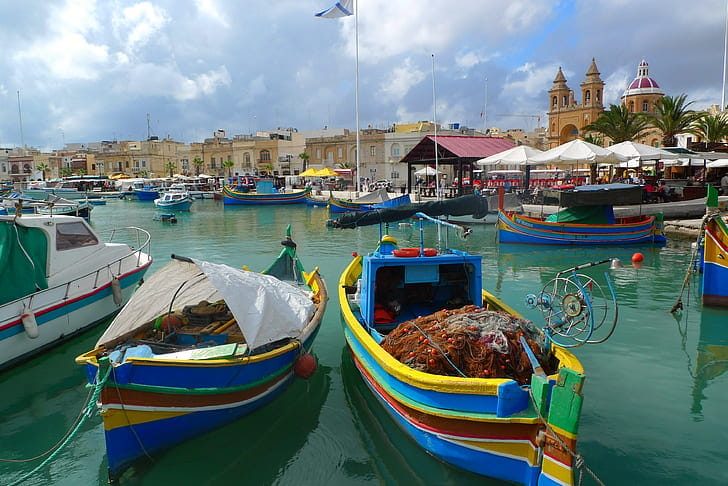
Photograph — CC / public domain
Overview
The narrow EU route where citizenship and residency are both purchasable by law.
Malta occupies a unique position: an EU member state with a legislated path to citizenship for substantial investors, and residency programmes with published tax treatment rather than discretionary outcomes.
The citizenship route runs through a grant of naturalisation by certificate for exceptional services by direct investment. It requires a qualifying contribution, a property purchase or lease held for a defined period, a philanthropic donation, and — critically — a period of Maltese residency before the application can proceed. It is not a same-year product, and the marketing that presents it as one is misleading.
The citizenship programme has been the subject of infringement proceedings from the European Commission and a 2025 ruling from the Court of Justice of the European Union on investor-citizenship schemes generally. Applicants should treat the programme as politically exposed: it exists today, at today's terms, and it may not exist on the same terms when your application is filed. Anyone selling it as permanent certainty is misrepresenting the risk.
For residency without citizenship, the Permanent Residence Programme and the Nomad Residence Permit serve different populations. The tax treatment under the Global Residence Programme (15% on remitted foreign income above a minimum annual tax) is explicit and worth modelling honestly against a territorial system like Panama's.
How it scores
Editorial scores, 1–5, on a consistent basis across the index. 5 is favourable (low tax, strong mobility, fast, cheap, low presence). They are a comparison aid, not a recommendation, and they weight nothing — that is what the finder does.
Routes currently available
Timelines are indicative ranges for a complete, well-documented application and are frequently extended by administrative backlog. They are not guarantees.
Tax position
How Malta taxes you
Malta taxes residents on a remittance basis in many cases: foreign income is taxed only when received in Malta. The Global Residence Programme applies 15% to remitted foreign income above a minimum annual tax. Malta operates a full imputation system for companies and has an extensive treaty network, which makes it a common holding-company jurisdiction as well as a personal residency one.
What works
Strengths
- The only statutory citizenship-by-investment route inside the European Union.
- English is an official language; most administrative processes run in English.
- Published, non-discretionary tax treatment under the residency programmes.
- Full EU freedom of movement once citizenship is granted.
What to watch
Risks and caveats
- The citizenship programme faces active EU legal challenge; terms and availability may change before your application concludes.
- Due diligence is genuinely rigorous — source-of-wealth evidence and clean records are non-negotiable.
- Cost is high across every route: contributions, property, donations and professional fees compound.
- The 15% remittance-basis regime is not zero tax. Compare the total cost honestly against territorial alternatives.
Compare
Other jurisdictions in the index.
 PT
Portugal
Narrowed golden-visa routes after 2023 — funds and income pathways remain.
 PA
Panama
Territorial taxation and a USD economy — the classic offshore base.
 AE
United Arab Emirates
No personal income tax; 9% corporate tax above the threshold.
Next step
Is Malta actually open to you?
Eligibility depends on your citizenship, income sources, family structure and timeline. An assessment tells you whether Malta is viable for your situation — and which routes are closed.